

Walking on the Twelfth
One day in July in 1878 asks a perennial question: whose streets?


On Monday, in towns across Northern Ireland, streets will fill with orange sashes and the sound of the fife and drum. Orange marches are annual events celebrating Irish Protestant history and heritage. They are held on the public holiday commemorating the defeat in Ireland of the Catholic forces of James II by William of Orange.
While the parades in Ireland are expressions of Protestant community pride, they are still viewed by many Catholics as triumphalist displays rooted in Northern Ireland’s bitter past. At one time marches on “the Twelfth” were catalysts for sectarian violence.
They are largely peaceful events now. With each year that passes without incident there is fresh hope that sectarian strife is receding into history.
In the 19th century, the Orange Order in Canada was a powerful political machine defending the interests of the English Protestant majority against Irish and French Catholics. The Twelfth was once a public holiday in Toronto.1
As the Know-Nothing movement gained strength in the United States, Orange Lodges multiplied, defending the political and cultural dominance of native-born Protestants. Orange parades in the 1870s set off days of terror and violence in North American cities.2
The Orange Order in Canada has since become a community club like any other and it has experienced the same decline as other fraternal organizations. Local Orange Lodges still hold July parades, but they are generally quiet, orderly processions of middle-aged white men dressed in orange, with a few bagpipers and lambeg drummers.3 They carry Canadian flags and Union Jacks past halal meat markets, vape stores, and boba tea shops. The streets don’t close for them. There are no onlookers.
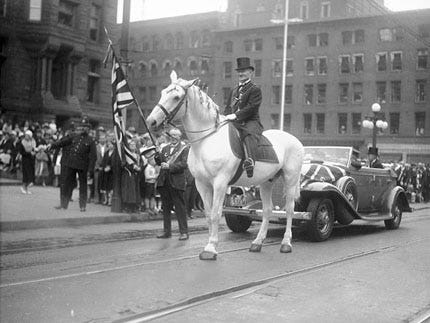
Then there is the story of July 12th, 1878, in Montreal. An Orange parade. A city on lockdown. And a brave mayor willing to confront the question of who has the right to public space.
As we witness more public demonstrations of hate by white nationalists, we are left asking: who can claim the streets, and on what terms?
Montreal 1878: Boyne's Red Shore

At nine o’clock in the evening, July 12, 1691, near the village of Aughrim, Galway, under heavy rain, an army of Catholics loyal to King James broke ranks and fled before the forces of Protestant William of Orange. The Jacobite cavalry turn…
It’s still a public holiday in Newfoundland.
The 1870-1871 Orange Riots in New York killed 70 people.
The lambeg drum is believed to have come to Ireland with the forces of William of Orange during the campaign against James II. While the drum is associated with Unionists, it is also used by the Ancient Order of Hibernians and unironically embraced by Irish nationalists.
The Twelfth of July was a big day where I come from and a source of huge excitement for us children, since we weren’t aware of the sectarian background to all of it then, since our village was probably 90 per cent Protestant. My older brother’s birthday was on the 12th, and when he was wee, he allegedly thought the bands came out to celebrate with him!
I remember an orange march in Edinburgh, twenty years ago perhaps. Anyway, hadn’t expected it, and I remember how the atmosphere in the street changed, people disappeared into shops and the pub, a touristy pub just off the Royal Mile, a woman encouraged me to go in with her. It felt eerie and menacing but passed by peacefully.