

Seattle 1967: Ralph Rising
A guest post

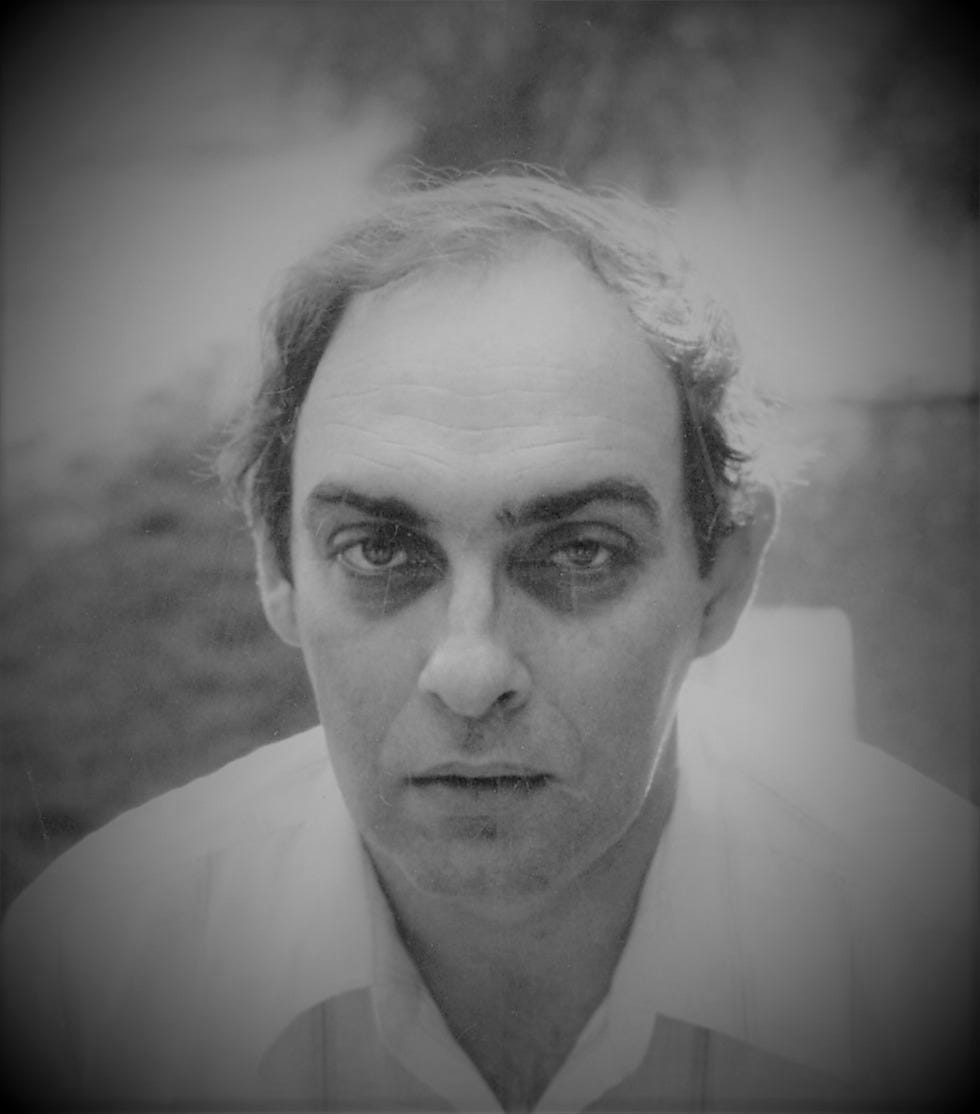
The nearest past is the most easily lost.
You are already grown by the time you understand that your parents are people. You will never really know about their lives. Too much has sunk below the surface. It’s not for their children to see.
If you are lucky, one of them tells a story. It is a tide pool at the edge of that immense ocean of personal history. You are luckier still if you can remember it. Luckiest of all if you can write it down.
This family story from David Lane is a dispatch from the deep.
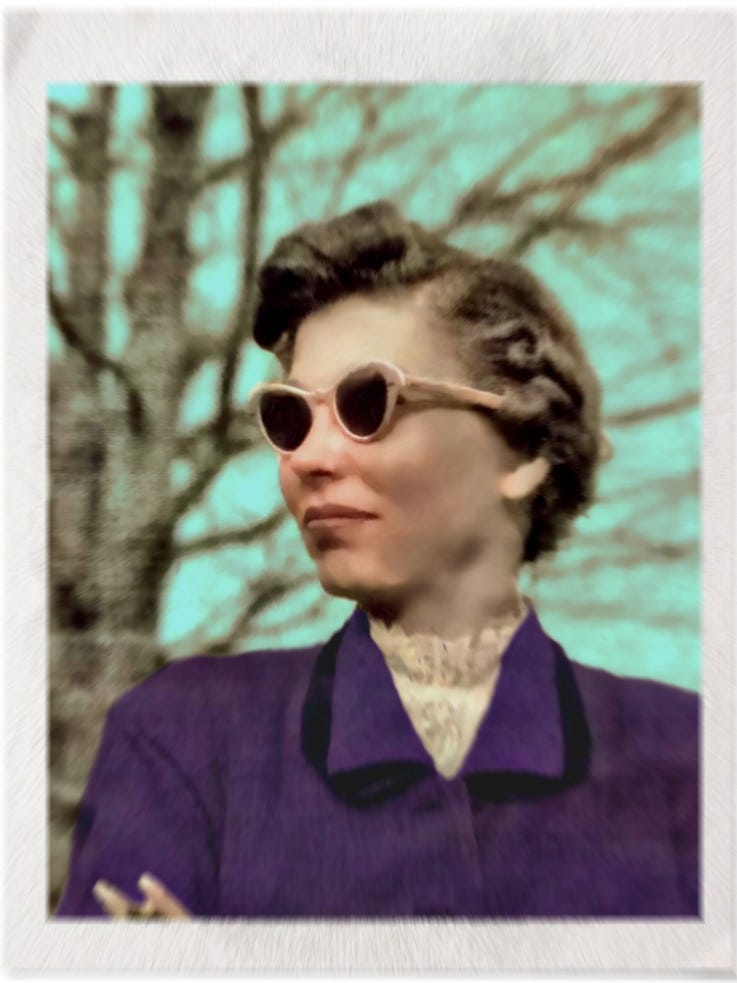
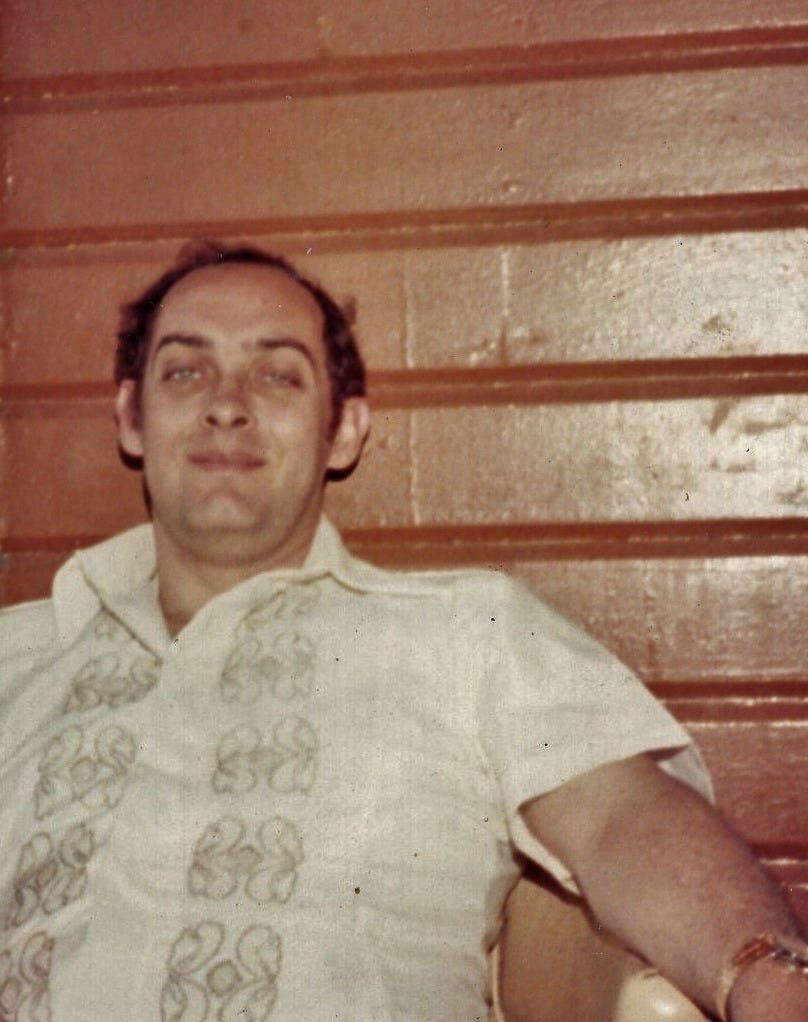
Photos are from his personal collection.
TW: this story includes dark themes and self-harm.
Nineteen year-old Ralph came home after a hot day of work on the docks during the Summer of Love to find his first wife dead on the floor. Half-lying, half-sitting. She had removed one of two square cushions from the orange sofa and had sat on the floor with it upright behind her back, propped up against the leg and arm of the sofa. Dark brown hair against an orange background. There was torn fabric that the cushion usually covered.
The splay of her legs told Ralph she was dead. She looked like she’d fallen through the ceiling from the sky and landed there in front of the broken TV with the Fab Four scotch taped on the dead screen. There are a lot of little details like that; I don’t want to get tied up in them. This is one true story I know with a beginning, middle and end. But details help make things real: TV was an emblem for them of stupidity and emptiness, and four smiling mop tops were just the perfect photo to stick there, something they could laugh at together.
Ralph was wearing a plaid shirt that day even though it was summer. Seattle is cool in the morning, plus long sleeves protect your forearms from scratches while you unload. Today was crates of lettuce. Around ten it got too hot so he took it off. Ralph was in good shape in those days and he liked to show off his body. When he realized people could spot the little needle bruises on his veins even among the red scratches he put it back on. Ralph wore blue jeans and the damp plaid shirt when he entered the room.
Ralph bent down to examine her. The TV and table hemmed him in. He kicked Ringo in the face to make room. The anger was gone instantly because her dead face filled in all the space for moods and thoughts. Smelly smoke came out of the cracked screen.
He didn’t need to bend down. He didn’t need to stand back up. The world stopped in Ralph. We’ve come to the existential moment of the story.
Facts make things real, but what really matters is how they get clustered together. Stars are grouped by myths. You can point to Orion’s Belt. What Could Have Beens and What Can Bes – those are the clusters, the pictures we draw around facts. It’s not so much that our imaginations sift through Life to come up with stories, like a Hollywood screenwriter, it’s more that the Real is plucked from the Possible, and the plucker isn’t really you, it’s the could have beens and can bes of your life. Could have beens and can bes.
Same with Ralph. Ralph believed he acted because of facts. But what’s important is how that moment was laid open to him. What acts fit?
‘Meaningful’ means for a long time nothing fits.
Ralph didn’t cry. Ralph hadn’t cried since he was ten, and that was a physical pain that would’ve made most men cry. A good, good cry could have prevented what he did next, but at that time Ralph didn’t have that as a possible response.
No, confronted with the death of the woman he loved, Ralph thought. Nineteen and calculating. Aware that neighbors could hear everything through the walls and ceiling and floor, Ralph undertook deciding what his reaction should be. That brand of insanity is never taught to actors, but the actor in each of us knows it instinctively: what do I do next? How am I to feel now? A corpse near his right boot.
Ralph told me there are four chambers of the heart, four chances at love. If you give your heart and it doesn’t work out, or she changes or you change or you fuck things up, one chamber shrivels. A man who does that four times dies, or has a raisin in his chest to pump blood. He wasn’t sure it was the same for women.
I think Ralph said this because he recognized in me the same tendency, to throw my life in a woman’s lap, and he wanted me to live a long time. The only form of advice he gave was allegorical. Or maybe it was literal: during his third marriage he had a triple bypass.
So this, according to his philosophy, was the feeling of a chamber shriveling.
Ralph felt something, a different consistency from the rest of his body, rise up from his stomach into his chest. This sap didn’t make it to his throat and face. Some valve shut off. He wouldn’t blubber, like a baby. But here’s the thought that almost got Ralph crying: only one thing can save him from hell, love, and all of his relationships were disasters.
Ralph at that moment was the son of a mother he despised and a complete stranger father and the brother to a brother and sister he didn’t really talk to or feel comfortable around and he was a friend who had lied in big and little ways to everyone he knew and he was a resident who snuck around the landlord when rent was due and he was the father to a son whom he would not meet for another twenty years by a woman who refused to speak to him and an employee who resented his boss and his job and he didn’t even yet know about the wars he’d have with his daughters, or the devastating death of their mother, his second wife.
Ralph cast his mind wider, made a list, discarded, stayed focused. Facts. Ralph had unloaded lettuce crates and was body-tired. Ralph’s sweetheart was dead on the floor and he needed to act. A paperback on the radiator under the window had fanned, browned and curled, barely visible under the dirty sill. Ralph had just enough money for the rent this week. This continues indefinitely: slave life of work to pay debts accrued in the course of daily living. He was on the last chapter of that book when he misplaced it and now it was destroyed. Ralph was not one step closer to his childhood goal of narcissistic omnipotence in a world full of love. Ralph did not know how to break this cycle and go to law school, or become famous, change direction somehow. Ralph lacked an imagination capable of forecasting the unexpected arc of life, even with proof at his feet. The cover curled over, away from him, exposing a blank first page.
Ralph got impatient with turmoil.

Ralph had loved another woman, two years ago, in New York, and she was pregnant when he left. Maybe she would let him back in. There were two kids from her first marriage, they’d be about five now and she could use help, he thought. Ralph didn’t know she’d had a nervous breakdown after he left, or that she’d had his son once Ralph had wandered west. He had called her, tripping on acid at midnight, wrote her letters and poems, went to her job. A pang of shame came with the insight that he’d made himself intolerable and no reunion was possible. Another dead end thought.
What really caved in his sternum after each gong of conscience and bile was that his wife had reneged. She had backed out of their deal. Dead: what kind of shit was that? They committed themselves – out loud, formally - to life together and she backed out. She underlined each other condemnation and failure, and then repeated herself. She was the exclamation point at the end of his wrongly led life.
Talking to people was impossible. Ralph couldn’t answer questions. Ralph couldn’t talk to police or concerned people or doctors. Could he go to work on Monday? Could he eat dinner? Could he shoot up ever again? Could he sleep next door tonight? Could he drink at Luke’s and then cry? Could he dig a ditch for her under moonlight and leave town? Could he have a funeral parlor bury her for him? Could he walk to the bathroom and piss? Ralph couldn’t picture himself in any scenario. What could he do? You can see where this is going.
Ralph decided he wanted to be with her. A picture flashed in Ralph’s mind – the way they would be found, leaning on each other like books on a shelf.
First, Ralph needed money. He couldn’t risk survival. Ralph scoured the apartment for cash. It didn’t do much good because he regularly needed to attack all his secret stashes of cash and she had done the same just today to buy hers. Ralph checked behind the other orange sofa cushion and even went through her pockets, which were empty. Her pants were tight and it was awkward. An icy idea jumped up: I won’t have to do laundry; I can use the quarters. He took the five out of the Brubeck sleeve. He forgot about the ten in the Portable Emerson until 1989, while he died the second time, on an operating table.
Ralph changed his shirt and then put the plaid one back on because it looked better, authentic. Then he went to Mike in 2A and he told him that he owed some money to Luke, owner of the bar downstairs. Ralph even showed Matt the check he had from work to prove that he’d have money as soon as the bank opened Monday, at least by Monday night when he got home. Ralph was a good liar when he was nineteen.
He went to Pete, Walter, and Jenny, and Jay and told them all the same things, reworking the story each time, adding to his desperation when he believed the person had more money. Ralph gave them all the same line, “Borrowing from Peter to pay Paul,” even when he spoke to Pete. And he smiled. The last stop he made was at Luke’s where he convinced the bartender to cash his second party check out of the till. By the time they’d talk to each other and figure it out he’d be long gone.
The whole process took less than two hours. I don’t know where Ralph copped, there’s a fade out in the story. Next thing he was back in the apartment.
He talked to her now. He called her honey. Ralph explained it to her. It wasn’t only about her. For the first time in their relationship Ralph felt free to talk about his family and his past.
He put the other orange cushion against the base of the sofa, sat on the floor next to her and set up. Ralph told her we each get X amount of life and he was already used up by fears and frustrations and failures and fights and bad accidents. Ralph had his cutoff point wrong.
It must have been much more dope than he was used to by an order of magnitude. I also think that there was some greed along with the fear of all of that going into his arm.
Ralph had read Sor Juana’s Dream Poem and Dante and Kepler’s Somnium and he knew something really wild was about to happen.
He put his arms around her. He kissed her room temperature cheek.
What happens when we die? A man with a degree in evolutionary psychology told me that the brain releases natural opiates when the body gets mauled or dies suddenly. That explains hallucinations people have at the end of life. He hadn’t actually died ever, but he felt pretty confident that his explanation was more correct than the New Testament’s.
I avoid metaphysical commitments, but Ralph’s got good credentials to discuss this subject. Ralph told me Death is better than Shakespeare. And if there’s anything Ralph loved, it’s Shakespeare. Death, and opium. The two times he died and his opium experience in the Philippines with wife number three were, for Ralph, as good as it gets. Then comes Anthony & Cleopatra, Midsummer Night’s Dream, holding his first grandson, meeting me, and The Tempest. Hamlet, interestingly, doesn’t make the list.
Ralph also describes death in sensual terms, in terms of touch, not sights, or light, or sounds. “Pushing,” “pulling,” movement, like an example in a physics thought experiment (“a man in an elevator going through space is bouncing a ball…”). Ralph was also careful to separate drug sensations from the phenomena of dying. He’s a meticulous scientist of subjective feelings. With heroin, for example, hours flatten into minutes, while with dying, seconds become finite forevers.
He saw the plastic underside of the TV set on the oak floor. Not something you normally look at. His neck relaxed and he looked at the ceiling. The painters missed a spot by the ceiling fixture. That’s a stupid last thought, he thought, “the painters missed a spot,” and he hoped that wouldn’t be the final one but then it seemed comic that anyone would take issue with a man’s last thought and so it wasn’t really his last thought....

Ralph’s body was on the ground, but his spirit stood straight up. Stood up’s misleading, because it implies feet and lower legs and his body just tapered off to invisibility. No feet, but he did have a spine, a spine made of something like quartz or glass, and one strand of light ran down from heaven and lit up each vertebrae like deformed light bulbs going down his back. Gold bands of warm light encircled the interior of his head, neck, chest and middle, emanating from his lit spine. Light came out of his mouth, nostrils, ears, eyes, and from pores of his forehead. There once was a laugh track on tv but now all there was was roar of light
Christ had a long thin body that tapered off, too. Christ had his hands together in prayer and white robes. Christ resembled the bearded John Lennon from the back of Hey Jude, with wire granny glasses. Long white hair and a full white beard. Christ’s head tilted down a little to his left. Emanations.
Christ was undulating subtly under his aura but staying still, moving, in a mysterious way. Christ spoke and his voice was lutes and harps and bright brass and blossoming hyacinth.
Christ said: I’m going to the airport. Report back to me later.
Ralph got the message. Ralph stays on Earth.
Ralph didn’t see Christ go, but felt the heaven-vibe diminish and thought he sensed the original longing of Christ’s disciples for him to remain, a desire so strong they could convince themselves he came back, or was coming right back, or by definition couldn’t leave. There was a pull, down, like his body regained gravity, or he was filled with iron and the inert him on the floor was magnetized. Ralph grasped the early Christian belief that Revelations would occur in their lifetimes, that the world would end any day. Ralph wondered what kind of father, of son, of lover, of neighbor, what kind of casual acquaintance or stranger are you when you believe final judgment’s coming any minute?
More lucid, Ralph was surprised, then frankly relieved by death’s rejection. Descending more, Ralph was slightly dismayed at the prospect of facing life again. His body. Her body. He’d bet every penny. He’d probably get thrown out of the apartment. Waking further, embarrassment and elation and exhaustion blended into a brown film on his half-thoughts.
Saturday. Sun was breaking up the morning fog.
Ralph sat with the dead.
Ralph in time wiped the vomit off of his chin with his left hand. The word chagrin plopped into his head. Ralph felt he had aged. He took a look at her and he chuckled involuntarily, he doesn’t remember why.
Then Ralph did what any human animal does when the body and the mind refuse to break down. He got up off the floor. Rigor mortis was setting in, so he had to struggle to remove his arm from under her stiff back and sit up. He stood and spasmodically stretched. Calf and shoulder twitched. The thought balloon over his head had an infant’s scribble in it. There was a garbage smell in the apartment.
He took a shower. That helped.
Ralph sat on the arm of the orange sofa, facing away from her, and pulled the phone to him. He wondered what numbers to dial. Ralph needed a bureaucrat, not a friend. No one was more anonymous than an operator, so Ralph dialed zero, and told the operator that his wife had died of an overdose and he needed to be connected to someone. She expressed sympathy and they shared an awkward silent moment before she connected him.
Ralph, sitting naked on the orange arm, waited for people to come to the door, to give him specific tasks to perform (Sign this) and direct questions to answer.
A yawn forced his face open. His ears popped. The pitch of the air changed. In fact, at that second, everything changed. From the ground floor of his soul on up, and with no clear cause, everything changed. Ralph now knew his next move. He would locate his father. He would introduce himself. Of course.
It was easy to get dressed. He did push-ups on the linoleum floor in the kitchen. There was a timid knock and he went to answer the door.
Twenty years later, I introduced myself to my father, Ralph.
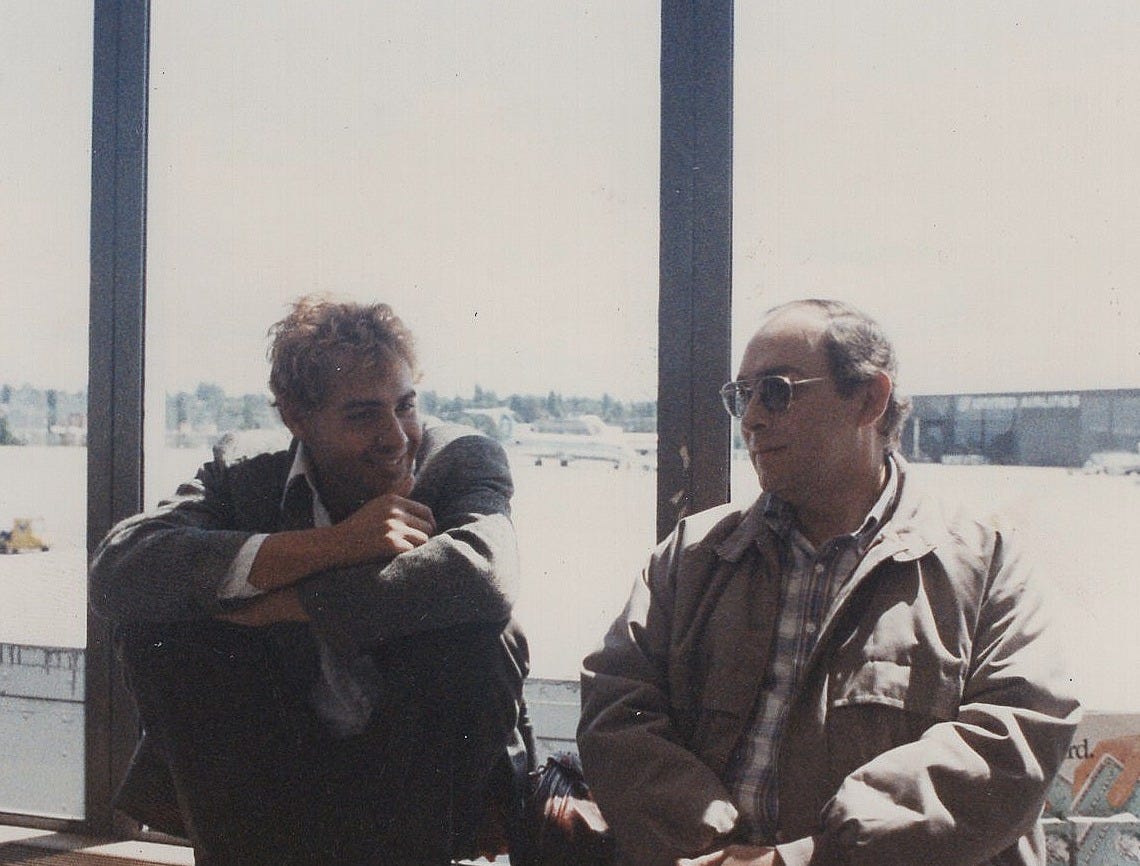
David Lane lives in the woods in Connecticut. He enjoys reading Talmud and has been trying to figure out the source of that buzzing sound in his kitchen since 2006.
 | A guest post by
|
That was uncomfortable and brilliant.
Wow ... What a story this is ... And so very well put together.